
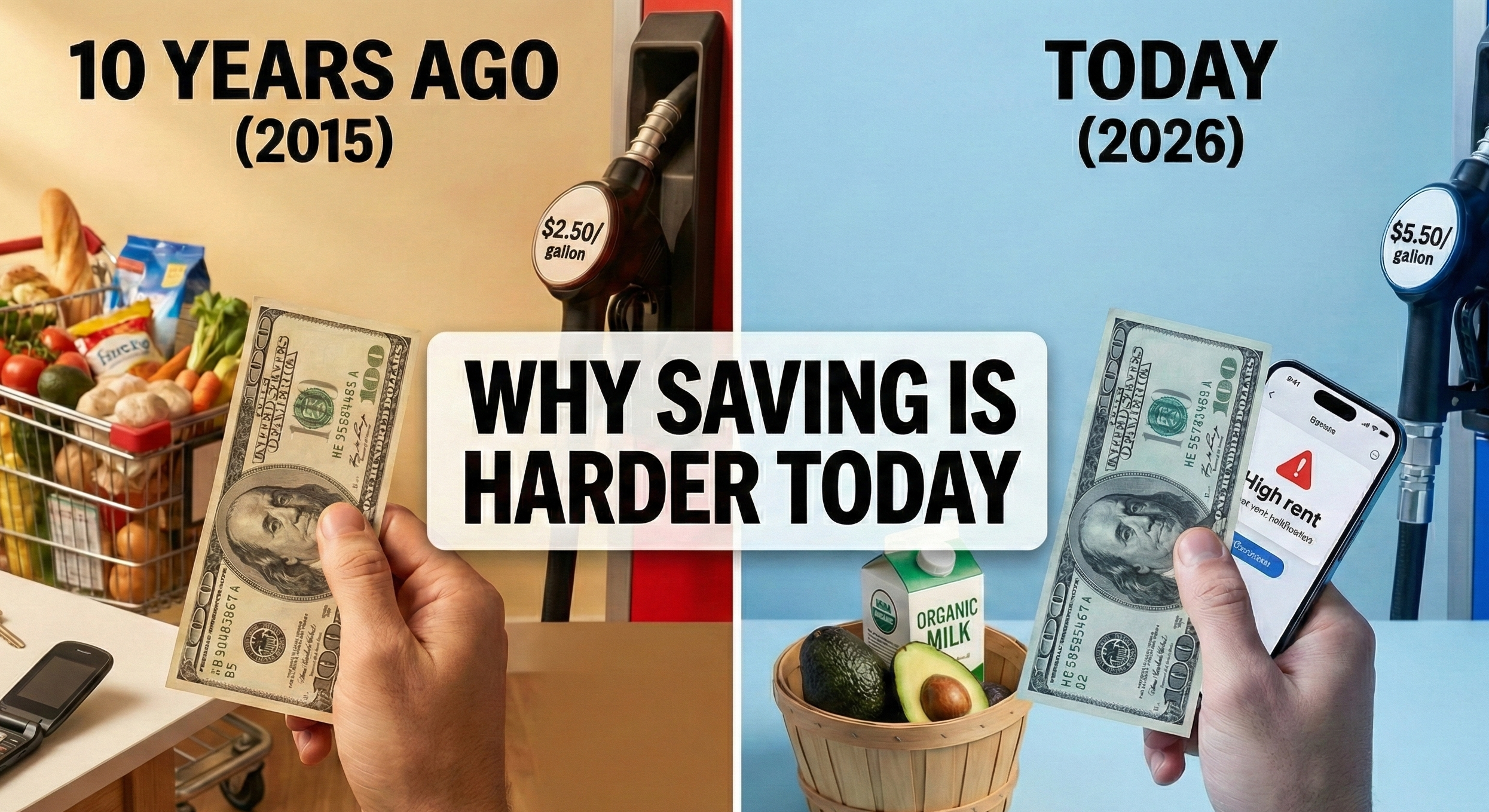
You’re earning more than you did five years ago. Maybe even double. Yet somehow, saving money feels harder today than it ever has before.
You’re not imagining it. And you’re not doing anything wrong.
The Invisible Shift Nobody Talks About
A decade ago, saving money meant one simple thing: spend less than you earn. The math was straightforward. Your expenses were predictable. Your temptations were limited.
Today, that same advice feels almost useless.
Why saving money feels harder today isn’t about willpower or discipline. It’s about a fundamental change in how money moves through our lives. The economy didn’t just shift—the entire relationship between earning and spending transformed in ways most people haven’t fully noticed.
In 2014, your biggest monthly expenses were probably rent, groceries, and maybe a phone bill. Today? Add streaming services, food delivery apps, online shopping with one-click checkout, subscription boxes you forgot you signed up for, and digital purchases that don’t even feel like spending.
The structure of spending itself has changed.
Why This Problem Exists
Everything Became a Subscription
Ten years ago, you bought things once. A movie. A book. Software.
Now everything is monthly. Netflix. Spotify. Amazon Prime. Cloud storage. Meal kits. Fitness apps. News subscriptions. Gaming passes.
Each one seems small. But fifteen subscriptions at ₹200-500 each suddenly means ₹5,000 monthly that wasn’t there before. Money that silently leaves your account whether you use the service or not.
The subscription model is designed to make spending invisible. No big purchase to think about. Just small recurring charges that your brain stops noticing after the first month.
Convenience Became the Default
Ordering groceries used to mean planning a trip to the market. Now it means opening an app.
Getting food meant cooking or going to a restaurant. Now it means tapping your phone while lying in bed.
Every friction point in spending has been removed. The ten-minute walk to the store that gave you time to reconsider a purchase? Gone. The effort of going out that made you think “is this really necessary?” Eliminated.
Convenience is wonderful. But convenience also means you spend before you’ve had time to think.
Inflation Hit Where It Hurts Most
Official inflation numbers tell one story. Your actual expenses tell another.
Rent in major cities hasn’t gone up 6% annually—it’s doubled in many areas over ten years. Education costs haven’t risen gradually—they’ve exploded. Healthcare, childcare, and basic services have all increased faster than salaries for most middle-class families.
Meanwhile, the things that got cheaper—electronics, fast fashion, cheap furniture—are things you don’t buy every month. The things you do buy every month all got more expensive.
Your salary might have increased 40% over ten years. But if your major expenses increased 80%, you’re actually worse off while earning more.
Social Pressure Went Digital
A decade ago, keeping up with others meant occasional gatherings where you noticed someone’s new car or home renovation.
Now you see curated highlight reels of everyone’s best moments, purchases, and experiences every single day. Your feed is an endless stream of vacations you’re not taking, restaurants you’re not visiting, clothes you’re not buying, and lifestyles you’re not living.
The comparison is constant. The pressure is subtle but relentless. And it makes saving money feel like you’re missing out rather than building something.
What Most People Misunderstand
Here’s what gets missed in most conversations about saving: the problem isn’t your spending habits. It’s that the entire financial environment has been redesigned to extract money faster than it used to.
Most people blame themselves. They think “I just need more discipline” or “I should budget better.”
But you’re not competing against your own willpower. You’re competing against teams of engineers, psychologists, and marketers whose entire job is to make spending as effortless and appealing as possible.
Notification systems designed to create urgency. Limited-time offers that trigger fear of missing out. Free trials that convert to paid subscriptions. One-click purchasing. Saved payment methods. Personalized recommendations based on your browsing history.
None of this existed ten years ago.
Understanding this doesn’t mean you’re powerless. But it does mean being realistic about what you’re up against. You’re not failing at saving. You’re succeeding at resisting more financial pressure than any previous generation faced on a daily basis.
What Actually Works
Recognize the New Reality First
Saving money today requires different strategies than it did before because the game itself changed.
What worked in 2014—simple budgeting and conscious spending—still matters. But it’s no longer enough on its own.
You need to actively design friction back into your spending. Make it slightly harder to buy things impulsively. Delete saved payment information. Unsubscribe from marketing emails. Turn off notifications from shopping apps.
This isn’t about depriving yourself. It’s about giving yourself the same thinking space people naturally had before everything became instant.
Audit Your Invisible Spending
Most people have no idea how much they spend on things they don’t actively use.
Go through your bank statements for the last three months. Not to judge yourself, but to notice patterns. Look specifically for:
- Subscriptions you forgot about
- Regular charges for services you rarely use
- Small frequent purchases that add up (daily coffee, food delivery)
- Automatic renewals you didn’t consciously choose
Priya, a teacher in Bangalore, did this exercise and discovered she was spending ₹8,000 monthly on subscriptions and apps she barely used. Not because she was careless, but because each individual charge was small enough to ignore. Canceling the unnecessary ones didn’t feel like sacrifice—it felt like finding money she didn’t know she was losing.
Understand Lifestyle Inflation
When your salary increases, your expenses tend to increase to match it. This is called lifestyle inflation, and it’s why earning more doesn’t automatically mean saving more.
A 20% raise feels like it should transform your finances. But if you also upgrade your apartment, eat out more often, and add a few new monthly expenses, that entire raise disappears without you noticing any significant change in lifestyle.
Being aware of this pattern is half the battle. When income increases, you can choose to keep some expenses the same while directing the increase toward savings. Not all of it—some lifestyle improvement is reasonable and healthy. But not automatically all of it.
Accept That Perfect Saving Isn’t Realistic
The older advice was “save 20% of your income.” For many middle-class people today, especially in expensive cities or with family obligations, that number isn’t realistic.
Saving 5% consistently is better than saving 20% for two months and then nothing for the rest of the year because you feel guilty and give up.
Whatever you can save regularly is what matters. The amount matters less than the consistency. Financial stability comes from sustainable habits, not from aggressive short-term efforts that you can’t maintain.
The Clear Takeaway
Saving money feels harder today because it genuinely is harder. The financial infrastructure changed. The spending environment became more aggressive. The costs that matter most increased faster than incomes.
None of that makes saving impossible. But it does make it more intentional.
You’re not fighting against your own weakness. You’re navigating an economic reality that’s genuinely more challenging than it was a decade ago. Acknowledging that is important. It removes the shame and self-blame that often prevent people from taking any action at all.
Start where you are. Save what you can. Build systems that work with your reality, not against it. And remember that financial stability isn’t built in months—it’s built in years.
The fact that saving feels harder doesn’t mean you’re failing. It means you’re paying attention to what’s actually happening around you. And that awareness is the first step toward making choices that work for your life, not someone else’s idea of what your financial life should look like. FOLLOW FOR MORE..
This article is for educational purposes and does not constitute financial advice.


Pingback: Hidden Cost of Small Financial Decision 5 subscription Traps