The first time you use a credit card, it feels empowering.
You swipe.
The payment goes through.
No money leaves your account immediately.
It feels smooth. Effortless. Almost invisible.
That’s why credit cards don’t feel dangerous at the beginning.
They feel like help.
The problem is, by the time they start feeling heavy, the habit is already formed.
Why Credit Cards Feel So Easy to Use
Credit cards remove friction from spending.
There’s no pause.
No visible loss.
No immediate consequence.
When money doesn’t leave your bank account right away, your brain treats spending differently. Purchases feel lighter. Decisions feel smaller. And saying “yes” becomes easier than saying “no.”
This isn’t a discipline issue.
It’s human behaviour.
The Quiet Shift Most People Don’t Notice
At some point, something changes.
You stop using the card for convenience and start using it for comfort.
Small expenses move to the card.
Then bigger ones.
Then things you could pay for—but choose not to.
Slowly, the card stops being a payment method and starts becoming a buffer between income and reality.
Nothing feels wrong yet.
That’s what makes it risky.
When Credit Starts Feeling Like Extra Income
One of the most common mistakes people make is treating available credit as spending capacity.
A high limit feels like permission.
A low balance feels like progress.
But credit is borrowed time, not extra money.
When spending expands to match the limit, future income quietly gets pre-committed. The pressure doesn’t appear immediately—it builds in the background.
Why Minimum Payments Feel Safe (But Aren’t)
Minimum dues are designed to feel friendly.
They’re affordable.
They reduce panic.
They give a sense of control.
But minimum payments keep balances alive. Interest keeps accumulating quietly, even when spending slows down. What feels manageable today often stretches far longer than expected.
This is how short-term relief turns into long-term stress.
Rewards Don’t Cancel Out Bad Decisions
Cashback.
Points.
Discounts.
Rewards feel like winning.
But rewards only help when spending stays intentional. Buying something unnecessary just to earn points still costs more than it gives back. Saving ₹500 through cashback doesn’t help if the purchase wasn’t needed.
This is how “smart spending” slowly becomes extra spending.
Why Credit Card Stress Builds Slowly
Credit card problems rarely explode overnight.
They creep in quietly:
- One rolled-over balance
- One delayed payment
- One tight month
Over time, mental space shrinks. Decisions feel heavier. Even normal expenses cause anxiety because a part of future income is already spoken for.
The card hasn’t changed.
Your flexibility has.
What Healthy Credit Card Use Actually Looks Like
Credit cards work best when they follow simple boundaries:
- Used only for expenses you already have the money for
- Cleared fully every billing cycle
- Treated as a convenience, not a fallback
In this role, they offer ease without pressure.
The moment balances start rolling, the relationship changes.
Control Isn’t About Willpower
Most people think control means tracking every expense or resisting constantly.
It doesn’t.
Real control happens before spending:
- Knowing what the card is for
- Deciding what it should never be used for
Once boundaries are clear, discipline becomes automatic.
A Simple Rule That Prevents Most Problems
Here’s a rule that quietly protects finances:
If you wouldn’t buy it with today’s money, don’t buy it on credit.
This one decision removes most stress before it starts.
The Real Takeaway
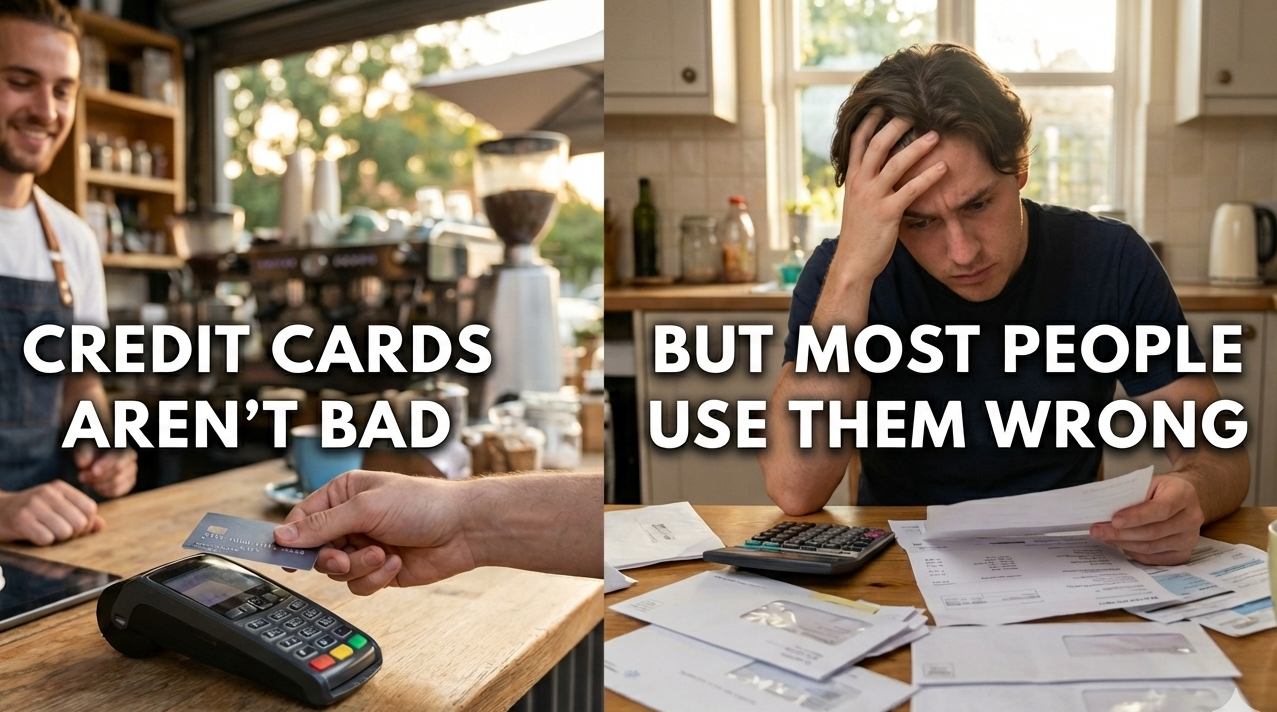
Credit cards aren’t bad.
They’re powerful.
And powerful tools amplify habits—good or bad.
Used intentionally, they support convenience.
Used casually, they quietly increase pressure.
The card doesn’t decide your financial future.
Your choices do.
Final Thought
Credit cards don’t trap people suddenly.
They do it slowly—by making spending feel easier than it really is.
Awareness is what keeps them useful. FOLLOW FOR MORE….